The Reading Room

Enter your email address:

Delivered by FeedBurner

Sunday, July 19, 2026

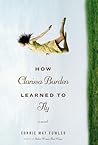
How Clarissa Burden Learned to Fly, by Connie May Fowler

How Clarissa Burden Learned to FlyHow Clarissa Burden Learned to Fly by Connie May Fowler
My rating: 4 of 5 stars

Connie May Fowler writes hard truths in beautifully gritty prose. The beauty lies in the beautifully crafted wording which paints a vivid picture. At the same time, the story propels the main character through a hard life - sometimes horrifically so - to a place where the reader knows that life will be better.

My first experience with Ms. Fowler's writing was several years ago with her book Before Women Had Wings. The book deals with child abuse, alcoholism, domestic (partner) violence, suicide, and abject poverty from a child's point of view. Avocet Abigail Jackson - better known as Bird - weaves a tale so difficult, yet mesmerizing, that a reader will almost want to put the book down, but will have a hard time doing so. It is only at the end of Bird's story that Bird and her older sister Phoebe, both of whom are white, are sent with their black neighbor, Miss Zora, to fly off to a better life.

Ms. Fowler's biography, When Katie Wakes, describes her life while living with "a man who was bent on destroying her, physically and emotionally."(1; see below) It is through the unconditional love of a dog (Katieland) that Ms. Fowler gains the confidence to leave.

In October, 2011, Connie May Fowler was at the St. Petersburg Times' Festival of Reading (now the Tampa Bay Times Festival of Reading) to promote How Clarissa Burden Learned to Fly. I purchased a copy on the strength of her book Before Women Had Wings, and seriously meant to read it immediately. Unfortunately, I've only recently read the book.

The first few pages of the book - a book which takes place exclusively during the summer solstice - made me a little edgy. Clarissa Burden has a bad case of writer's block. Her distant and somewhat abusive husband, Igor "Iggy" Dupuy, an Afrikaner, photographs nude women (when he isn't taking them to bed), while letting the women think that Clarissa is his housekeeper. He treats Clarissa horribly, attempting to control her every move, even as she's their main financial support. I spent the first few pages thinking, "Honey, you really need to kick that jerk out!"

However, after Iggy decides to leave for "business" in town, Clarissa's growth begins. She takes her pickup truck, which seriously needs to be traded in on almost anything, out to run errands of her own. This includes getting rid of the huge pile of garbage that Iggy has placed in both the cab and bed of the truck, a truck which gets sold to a man she's nicknamed Cracker Barrel. The book gets stranger/more interesting as Clarissa's day progresses. When she gets home (with a beautiful yellow El Camino), the reader catches another glimpse into Iggy's abusive treatment of his wife: he treats her shabbily, then orders her to take back her new vehicle and to bring back the truck.

As with most of Ms. Fowler's books (at least the ones I've read thus far), it is in the last section of the book that Clarissa finally catches a break - a break that, along with her growth during the book, grants her her freedom. Iggy and Clarissa are atop a fifty-two foot fire tower, and...Clarissa lives with no serious injuries, a traveling carnival's Money Dog survives because of her, Iggy - a man nobody likes - is arrested, and Clarissa's writer's block is gone. How?

You'll have to read the book.


(1) Quote from Connie May Fowler's website: http://www.conniemayfowler.com/Syn_Ka...


View all my reviews

Thursday, July 16, 2026

Traveling Mercies: Some Thoughts on Faith, by Anne Lamott

Traveling Mercies: Some Thoughts on FaithTraveling Mercies: Some Thoughts on Faith by Anne Lamott
My rating: 5 of 5 stars

While many people grew up knowing, and growing into, their faith, whatever faith their lives lead, others didn't find their route to God/Allah until later in life. In Traveling Mercies: Some Thoughts on Faith, Anne Lamott wrote about her path from unbeliever to believing in God, and becoming a liberal Christian.

The early part of the book describes her youth, playing tennis, growing up with liberal parents (her dad, a writer, mom, who became an attorney later in life) who happened to be nonbelievers. In the book, Lamott wrote about her years of heavy drug and alcohol use, of having several abortions, and, finally, deciding to keep one of her pregnancies. During this time, she would go to a large nearby weekend flea market, which happened to be across the street from a Presbyterian church. Eventually, the singing coming from the church drew her in, though she wouldn't stay for the sermon. But the message, music, and love she felt from the parishioners drew her to God.

This isn't a straight-forward "this is how I got saved and never messed up ever again" type book. Far from it. Anne Lamott is still a lefty, still into causes, has an irreverent sense of humor, and is still trying to find her way in this world. A good part of the book deals with having her son, Sam, while still muddling through the early days of her faith, bringing Sam to church with her, where some of the older women insist that Lamott "let me see my baby."

For anyone who wants to read about someone else finding their own path, whether or not the reader is a believer, Anne Lamott's Traveling Mercies: Some Thoughts on Faith is a satisfying read.

View all my reviews

Tuesday, July 14, 2026

Prince Caspian, by C.S. Lewis

Prince Caspian (Chronicles of Narnia, #2)Prince Caspian by C.S. Lewis
My rating: 3 of 5 stars

I recently decided to read the seven books in C.S. Lewis's The Chronicles of Narnia. My son had been telling me how much he loved the books for several years.

Recently, after finishing The Lion, the Witch and the Wardrobe, I started reading Prince Caspian. It took me a little longer to finish thus second book in the Narnia series.

Prince Caspian was raised by his uncle Miraz, but has to escape after Mirax's son is born, putting Caspian's live in danger. The book tells how Peter, Susan, Edmund, and Lucy Pevensie meet up with Caspian, then help Caspian take his rightful place as the king of Narnia.

When the children leave England, only a year has passed since The Lion, the Witch and the Wardrobe, while 1300 years have passed in Narnia, leaving the children struggling to determine where everything from the first book is.

While the plot of Prince Caspian is a little convoluted, it is still interesting. Part of the charm is following the plot and seeing how it fits with the first book.

All in all, Prince Caspian by C.S. Lewis is a decent read, whether read as part of the series, or by itself.

View all my reviews

Wednesday, July 1, 2026

Becoming Odyssa: Adventures on the Appalachian Trail, by Jennifer Pharr Davis

Becoming Odyssa: Adventures on the Appalachian TrailBecoming Odyssa: Adventures on the Appalachian Trail by Jennifer Pharr Davis
My rating: 5 of 5 stars

I've been interested in the Appalachian Trail since I was 12 or 13, when I first heard of it. For a while, I wanted to hike the trail. Unfortunately, it never happened. But that doesn't mean I can't live vicariously through books about the trail. That's where Becoming Odyssa: Adventures on the Appalachian Trail by Jennifer Pharr Davis comes in.

Jennifer started hiking the trail shortly after finishing college, picking Odyssa as her trail name. She started at the southern end of the trail, hiking alone, making it all the way to the end in Maine.

The book describes the trail, the thru-hikers she met, along with assorted others. One thru-hiker appeared to stalk her for several days, while other hikers were more acceptible.

At one point, she met two young men (Nightwalker and Mooch) who were hiking together; Jennifer managed to hike on and off with them, finally finishing the AT with the pair. She even managed to give Nightwalker's mom a trail name of Magic Mama, as Magic Mama periodically met up with the three to offer trail magic (helping out with food, etc).

There was one part of the book when Jennifer thought of quitting, as she ran across someone who died on the trail. But after taking a few days off, she was able to complete her hike.

If you're looking for a good read dealing with the Appalachian Trail, I highly recommend Jennifer Pharr Davis's Becoming Odyssa: Adventures on the Appalachian Trail. Definitely one of my favorite AT books.

View all my reviews

Tuesday, June 9, 2026

Trash, by Dorothy Allison

TrashTrash by Dorothy Allison
My rating: 4 of 5 stars

I've been known to devour books of short stories. What's not to love? Rather than chapters all advancing a novel forward, you have stories that are long enough to get (and keep) your interest for a short while, but not so long that you put the book aside and either lose track of the story line when you come back or lose interest altogether. It's like a platter of appetizers, all just a little different.

Trash, by Dorothy Allison, is a beautifully gritty book of short stories, each told of women who grew up in rural Southern poverty, struggling to escape their situations and their past, while loving their hard families. The rural poverty itself is almost alive in these stories, practically another character to be dealt with.

In the opening story, "River of Names," the narrator tells of being almost an outsider in a large extended family, "born between the older cousins and the younger, born in a pause of babies and therefore outside, always watching." She alternates telling about her family and talking Jesse, her lover, describing her family to Jesse. She is, in turn, talking to the reader, letting the reader, like Jesse, think, "How wonderful to be part of such a large family."

Except, of course, it isn't, the way the narrator describes it.

Fourteen other stories follow "River of Names," each showing the reader how difficult rural poverty is for many of its inhabitants. Each story will worm its way into the reader's mind, not wanting to be displaced or disrespected.

Of each of the fifteen stories, my favorite has to be "Mama." Allison describes growing up with a younger sister, their Mama, and their step-father, a small, violent man whom Mama states she'll leave just as soon as her daughters are grown. The reader gets the sense that Mama never does leave her husband; in fact, we're told point-blank that she is still with him, years after her daughters have grown up and moved out.

The story shows the bond between daughters and mother. At the end of the story, Allison describes how, on her stepfather's birthday, she'll make coffee and bread pudding with bourbon sauce, tell wild stories to her friends, and wait to talk on the phone with her mother.

If one is looking for a good read with pretty stories, this might not be it. But if one is looking for a really good read with the grittiness of life, the grittiness of love, Dorothy Allison's Trash fits the bill well.

View all my reviews

Sunday, June 7, 2026

Turtle Moon, by Alice Hoffman

Turtle MoonTurtle Moon by Alice Hoffman
My rating: 5 of 5 stars

Welcome to Verity, Florida, where the month of May is a dangerous time: long-time residents know better than to make any life-altering decisions during May, as everyone seems to "go a little crazy."

It is where Lucy Rosen and her son Keith have landed after leaving New York in Alice Hoffman's wonderful book, Turtle Moon.

While Lucy has come to Verity to escape an unhappy marriage, 12-year-old Keith is miserable in Florida, and gets into non-stop trouble - stealing, skipping school, and more - with a new friend.

One night, a single mother in the Rosen's apartment complex is murdered and her baby disappears. The "meanest boy" in town finds the baby in the complex's laundry room, realizes that no one is coming for her, and takes off with the baby, becoming her protector.

Julian Cash is the police officer assigned to solving the murder and finding the baby. He, too, was once considered the "meanest boy" in Verity, and can relate to Keith when he (Cash) finds the boy.

What transpires in Turtle Moon is a fast-paced story of complex people trying to find what will give their lives direction, while learning how to trust, as well as growing and letting go.

If you're looking for your next satisfying fast read, Turtle Moon by Alice Hoffman is sure to please.

View all my reviews

Thursday, May 28, 2026

Tampa Bay Noir, edited by Colette Bancroft

Tampa Bay NoirTampa Bay Noir by Colette Bancroft
My rating: 5 of 5 stars

There are short story collections that are mildly interesting, then there are collections that grab the reader's attention and won't turn loose until the last page. Tampa Bay Noir is definitely the latter.

Edited by Colette Bancroft (former book editor for the Tampa Bay Times), Tampa Bay Noir is one of two books representing Florida in publisher Akashic Books's noir series. (Miami is the other Florida city.) As with the other noir anthologies, this book has all new short stories; these are based in different areas of the Tampa Bay area, mainly Hillsborough and Pinellas Counties. Michael Connelly's "The Guardian," set in Hyde Park, opens the anthology; Tim Dorsey, Lisa Unger, and a host of others add stories/mysteries to this quirky, dark collection, ending with Colette Bancroft's "The Bite."

While some of the stories here may not be for the faint-of-heart, I found the book difficult to put down. Each story, each writer, took the book to another level that ensured that I will definitely put this into my rotation of books-to-reread-and-reread, year after year. It also left me with a list of writers who novels will soon be in my to-be-read pile.

For anyone who has lived in the Tampa Bay area, thought about living here, or just plain wants a book to keep one captivated, Tampa Bay Noir is definitely the book to pick up and read, cover to cover.

View all my reviews